Showing posts with label interiorarchitecture. Show all posts

Monday, 19 September 2016

Tate Modern Switch House

The Tate Modern opened in 2000 and quickly became one of London's most important cultural attractions. This year in June we welcomed the opening of the much awaited new building The Switch House. The new extension has added an extra 60% of gallery space for visitors to explore. Designed by Herzog & de Meuron, the architects behind the original Tate building, the new structure is shaped like a pyramid twisting as it rises. The latticed clad brick work brings in natural light while helping the extension match the exterior of the original, seamlessly linking the two buildings.


View from the South
Images: Haye Davidson and Herzog & de Meuron


Beginning on Level 0, "The Tanks" is a space dedicated to film, installations and live interactive performance art. One used to store oil, these large circular concrete spaces are large in scale, raw and industrial. 


Pictured below is Seance de Shadow II (bleu) 1998 by Dominque Gonzalez-Foerster. The installation is activated when visitors engage with the space. 


The BMW Live: Active Sculpture gallery is pictured below. Here, all of the sculptures are activated by interaction. 


Pictured above; Robert Morris' Untitled 1965, reconstructed 1971.

"As the viewer walks around the four cubes, their mirrored surfaces produce complex and shifting interactions between gallery and spectator."


On Level 0, visitors are first confronted by the main staircase in all it's curved beauty. 


View down into the tanks


Seating areas around the concrete circulation spaces. 


The concrete curves continue through the levels and latticed brick exterior can we seen from the inside windows offering amazing shadows and bright, natural light. 


The new roof terrace offers stunning panoramic views of the city. 


Tate Modern
Bankside London SE1 9TG
Open from 10am
Entry is Free


Tuesday, 2 August 2016

Natural Flooring - The Comparison: Sisal, Coir, Jute, Seagrass and Rush Matting

The recent heatwave has seen Londoners flocking towards rooftop bars, equipped with white washed walls and a good stock of chilled Rose – while woolly jumpers have booked a last minute staycation to the back of the wardrobe.

At Wickenden Hutley, we have been looking at natural fibre mattings as a cool alternative for tropical climbs, which can (thankfully) also provide a practical and smart alternative to a standard wool carpet during the colder winter months.

A selection of Abaca (banana leaf) and Jute rugs 

As with most floor coverings, natural fibre mattings can be used as area rugs or fitted wall to wall – but are often seen as the less robust cousin of the trusty wool carpet. 

Whilst wool (and therefore wool carpets) will happily take a bashing (red wine/ carpet cleaner/ muddy feet and paws) and come off relatively unscathed due to a natural oil content in the wool, they still require an element of TLC to keep them looking fresh.  The same applies to natural fibres, which - if used in the correct setting, can be practical and sturdy and last for years.     


Abaca rug samples

If choosing a natural fibre, the area of use (how much traffic will pass over it/ how much dirt will it incur) comfort level required (some fibres are softer than others), and colour should be considered to increase the chances of a long and happy life together.

Below, we list 5 common options for natural flooring, and hopefully run through the essentials to keep in mind when making your choice:

Sisal

Composition: Agave fibres.
Texture: Varies hugely depending on how tight the weave is.  There is a huge variety of designs on the market and the comfort is dependant on design chosen, and personal opinion.  (We suggest standing on a sample in bare feet before committing!).
Colour: A great choice, ranging from naturals through to solid colours, with multiple colours worked into some designs.  (As with wool carpet, a mottled colour will be more forgiving than a solid light or dark tone).
Practicality and uses: Commonly used as wall-to-wall floor covering, also good for area rugs – which need to be bound or whipped to prevent the edges fraying. A mid sized weave and colour looks smart, works well as wall-to-wall carpet and will look great on stairs. Tighter textures may show wear and tear more, and chunky weaves can be less practical on stairs as longer fibres would be likely to break over time.  Spills should be dabbed up asap, as if left to sit – may stain and be hard to remove (though often fade over time).  Wet cleaning methods should never be used.  Sisal can be used throughout the house – except very wet, or dirty areas.

Mellcarta 8060k at Sinclair Till


Sisal Schaft 1001ak at Sinclair Till

Coir

Composition: Outer fibres of the coconut.
Texture: Usually rough and scratchy.
Colour: Holds colour well Sinclair Till stock a range of beautiful coloured coirs, as seen in our Director, Charlie’s new house (full story coming soon..!)
Practicality and uses: Woven coir is quite sturdy and hard wearing, making it good for stairs and entrance halls.  Coir mats (a different thing to the woven matting, though from the same material) have been used for years as entrance rugs where the fibres stand vertically and act to remove dirt from shoes before entering the house. Coloured coirs have often been used in restaurants and dining areas, and a multi-coloured option will be less likely to show any stains.   Coir may be less practical for family areas such as play rooms, as the roughness isn’t suited to little feet and bare skin.


(Above and below left) Peacock Coir installed in Barnes
(Below left) additional colour ways  

Jute

Composition: Jute (plant) fibres.
Texture: Softer, silkier texture compared to other natural fibres.
Colour: Natural colours vary from grey tones through to honey and gingery tones.  Jute is good for cool greys, as natural fibres can often stray towards warmer tones.  Jute can also be dyed to achieve some bright and vibrant colours.
Practicality and uses: The softer texture makes it less hard wearing in busy areas, but the softness is lovely underfoot in living rooms or bedrooms.


Natural jute rugs at Sinclair Till


Jute at Tim Page; Elver in Petrol


Jute at Tim Page; Elver in Rust

Seagrass

Composition: Seagrass.
Texture: Hard (like dried grasses).
Colour: Natural with a green tinge at times.
Practicality and uses: Like sisal, seagrass can be used as wall-to-wall flooring, on stairs and throughout the house. It is a more brittle fibre, so may show damage a little more than sisal, and can sometimes makes stairs a little slippery in some opinions. 


Seagrass Fine Panama, Natural at Sinclair Till

Rush matting

Composition: Bulrushes (a British industry – bulrushes are still harvested from our waterways today).
Texture: Solid, but not scratchy.
Colour: Green to start – mellows to softer honey tones over time.
Practicality and uses: Woven in 3” widths, which are then joined together.  Rush matting can be used as mats or close covered (fitted wall-to-wall).  The matting should be kept moist to prevent damage and keep the material supple.  


Woven rush matting

With natural matting believed to date from the early sixteenth century found beneath floor boards at Hampton Court Palace, it has clearly withstood the test of time as the flooring of Kings!


Tuesday, 1 March 2016

WICKENDEN HUTLEY'S TOP INTERIOR DESIGN BOOKS

We are constantly looking for new inspiration in the office and now it is easier than ever to source an image with the help of Pinterest and Instagram.  With that said, when you find a beautiful new publication nothing can beat it... 

Below are some of our well known and trusted reads and some new exciting books on the market.


'English Eccentric'
Ros Byam Shaw


A truly eclectic home is one that develops over time, with pieces bought that catch the eye of the buyer for their own uniqueness, not because they 'go' with a scheme.  This book shows some stunning examples of how people are not afraid to mix patterns, colours or the old with the new. Ros Byam Shaw gives us a look into 18 different homes, each totally individual to the homeowners themselves, who range from artists and antique dealers to florists and writers to name a few, all of which show the courage to be bold and original.


'Axel Vervoordt'
Timeless Interiors


'Timeless Interiors' gives readers a rare insight into the interiors of Axel Vervoordt, one of the world's leading antique dealers. Revealed in this book is beautiful imagery taken from twenty-three houses across the United States and Europe. 'Timeless Interiors' is an absolute must have for our office as Axel Vervoordt beautifully and perfectly demonstrates how important it is to respect and incorporate the history in every project, a value which Wickenden Hutley also holds close.  


'Interiors Atelier AM'
Alexandra Misczynski and Michael Misczynski


Endorsed by Axel Vervoordt, there is everything to love about the contents of this interior design book. Husband-and-wife team Alexandra and Michael Misczynski are gifted in designing calm yet bold spaces. They have a skill for mixing seventeenth and eighteenth century objects and furniture with the modern in a combination of finishes. The result is muted, modern and refined.


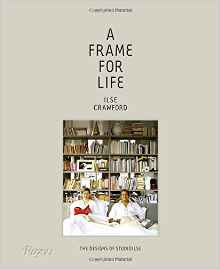
'A Frame for life'
Ilse Crawford


Ilse Crawford's love and understanding for spatial design is shown through all of her designs, as illustrated in this publication. Ergonomics are always paramount as she designs for her clients' needs and considers how they will interact with and use the space. This is something many designers fail to do and which we always try to keep at the forefront of the design process.


'Interior Portraits'
Victoria Hagan


Victoria Hagan is an iconic American designer known for creating the "new American classic" look. She uses sophisticated colour choices, refined materials and a smart integration of architecture and interior design. We love how she successfully makes connections to the surrounding landscape by considering the site of her projects. Her interiors are timeless and beautiful and always inspiring.


'Eat Drink Nap'
Soho House


If you've paid a visit to any Soho House you'll already know that the interiors inside these pages are always stunning and full of character. We love this book for it's beautiful photography, style and shared secrets. Soho House opens it's doors to us as the experts give an insiders view into their design process plus this book gets bonus points for including delicious recipes! 


'Maison'
Christian Liaigre


Christian Liaire's book 'Maison' showcases masculine minimalism at it's finest, using a palette consisting of greys, browns and creams combined with dark timbers and luxurious natural materials. Liaigre's interiors are clean, calm and modern. He is a designer that keeps to the tradition of the location of each project. 


'Time and Place'
Steven Gambrel


In 'Time and Place', Steven Gambrel writes about his design point of view. His designs aim to enhance the lifestyles of those he designs for. Across a range of projects, Gambrel embraces each project's individuality with a fresh approach to colour and his ability to mix the old with the new. 


'Rhapsody'
Kelly Wearstler


'Rhapsody' is a look inside the work of the iconic Kelly Wearstler. Her personal style is luxurious, bold and glamorous and this is reflected in her work for boutique hotels as well as for private clients. Her look has been called "mod-baroque" due to her distinct mixing of layers, colours, surfaces, textures and patterns. We love her 'dare to be brave' attitude to interior design.